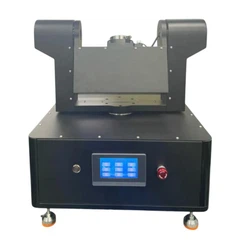
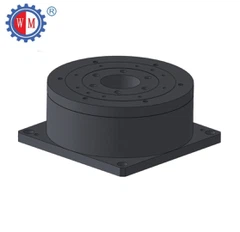
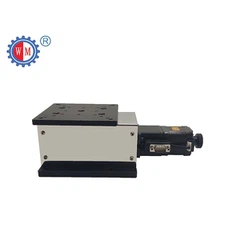
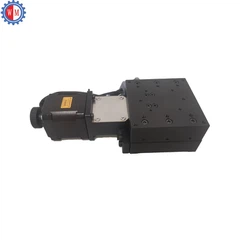
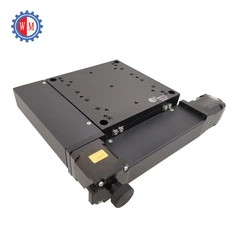
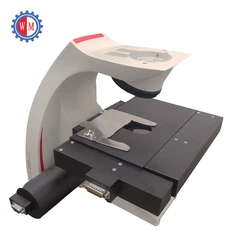
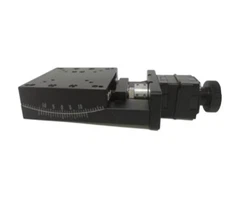


Hey there! As a supplier of 3 Axis Motorized Gimbal, I've received tons of questions about how these awesome gadgets handle sudden movements. Well, let's dive right in and figure this out.
How Does a 3 Axis Motorized Gimbal Work?
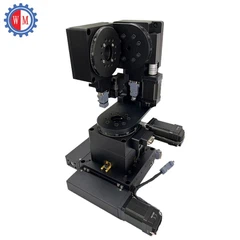
First up, we need to understand the basic working principle of a Three - Axis Motorized Gimbal Stage. In simple terms, it's a device with three motors that control movement along three axes: yaw, pitch, and roll.
The yaw axis is like the rotation of a car's steering wheel; it controls the left - to - right movement horizontally. The pitch axis is similar to nodding your head up and down. And the roll axis is like tilting your head from one side to the other.
These three motors work in harmony. They use sensors, such as accelerometers and gyroscopes, to detect the position and movement of the gimbal. When you move the camera or the object mounted on the gimbal suddenly, these sensors quickly pick up the change.
Handling Sudden Movements
Sensor Response
The sensors in a 3 Axis Motorized Gimbal are super - sensitive. They can detect even the slightest change in movement. For example, if you're walking and suddenly make a sharp turn, the accelerometers and gyroscopes will sense the change in direction and acceleration almost instantly.
Once the sensors detect the movement, they send signals to the motors. These signals contain information about the direction, speed, and magnitude of the movement. The motors then adjust their rotation accordingly to keep the object on the gimbal stable.
Motor Adjustments
The motors in a 3 Axis Motorized Gimbal are designed to respond quickly. They can change their speed and direction in a split - second. When a sudden movement occurs, the motors receive the signals from the sensors and start to rotate.
Let's say you're filming a fast - paced action scene, and you need to quickly pan the camera to the right. The yaw motor will receive the signal from the sensors and start rotating the camera smoothly to the right. It's able to do this because the motor has a high torque and can accelerate rapidly.
Control Algorithms
Behind the scenes, there are complex control algorithms at work. These algorithms are like the brain of the gimbal. They analyze the data from the sensors and calculate the optimal way for the motors to move.
For example, if you make a sudden diagonal movement, the control algorithms will determine how much each of the yaw, pitch, and roll motors need to rotate to keep the object stable. They take into account factors such as the weight of the object, the speed of the movement, and the current position of the gimbal.
Different Types of 3 Axis Motorized Gimbals and Their Performance
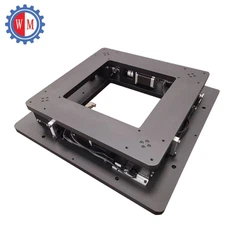
Heavy Load Motorized Yaw Pitch Roll Stages
These gimbals are built to handle large and heavy equipment. When it comes to sudden movements, they face a bit more of a challenge compared to smaller gimbals. However, they're equipped with more powerful motors and better - tuned control algorithms.
For instance, if you're using a heavy - duty camera setup on a heavy load gimbal and you need to make a sudden stop during a panning motion, the powerful motors can quickly decelerate. The control algorithms also take into account the inertia of the heavy object, ensuring that the movement is smooth and stable.
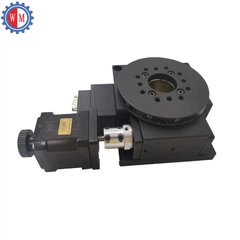
Mini Pitch Roll Yaw Motor Gimbal Stage
On the other hand, mini gimbals are lightweight and more agile. They're great for quick and sudden movements. The smaller motors in these gimbals can respond even faster because they have less mass to move.
If you're using a mini gimbal for a vlog and you want to quickly tilt the camera up to show something above, the pitch motor can make that adjustment almost immediately. The sensors in mini gimbals are also very responsive, allowing for precise control during sudden movements.
Real - World Applications
Filmmaking
In the world of filmmaking, sudden movements are often used to create dynamic and exciting shots. A 3 Axis Motorized Gimbal allows filmmakers to capture these shots without any shakiness.
For example, during a car chase scene, the camera operator may need to quickly pan and tilt the camera to follow the action. The gimbal can handle these sudden movements, keeping the image stable and smooth. This results in high - quality footage that looks professional and engaging.
Photography
Photographers also benefit from the ability of 3 Axis Motorized Gimbals to handle sudden movements. When shooting wildlife or sports, there are often unpredictable moments. A photographer may need to quickly change the angle or direction of the camera.


The gimbal ensures that the camera remains stable during these sudden changes, allowing the photographer to capture sharp and clear images. Whether it's a bird taking off suddenly or a athlete making a quick move, the gimbal can keep up.
Factors Affecting the Handling of Sudden Movements
Weight Distribution
The way the weight is distributed on the gimbal can have a big impact on how it handles sudden movements. If the weight is not balanced properly, the motors may have to work harder to keep the object stable.
For example, if you mount a camera on the gimbal with all the accessories on one side, the gimbal may struggle to adjust quickly during sudden movements. It's important to make sure that the weight is evenly distributed across all axes.
Environmental Conditions
External factors such as wind can also affect the gimbal's performance during sudden movements. Strong winds can push the object on the gimbal and make it more difficult for the motors to keep it stable.
In such cases, the gimbal's sensors may need to work harder to detect the additional forces. The control algorithms may also need to make more complex adjustments to counteract the wind.
Conclusion
In conclusion, a 3 Axis Motorized Gimbal is an amazing device that can handle sudden movements with ease. Thanks to its sensitive sensors, powerful motors, and sophisticated control algorithms, it can keep the object mounted on it stable even during the most rapid changes in direction and speed.
Whether you're a filmmaker, a photographer, or someone who just wants to capture smooth and professional - looking videos, a 3 Axis Motorized Gimbal is a great tool. And if you're interested in getting your hands on one, we're here to help! Reach out to us for more information and let's start a conversation about your specific needs. We're always happy to discuss how our gimbals can meet your requirements.
References
- "Advanced Robotics: Kinematics, Dynamics, and Control" - Some detailed knowledge about the control algorithms and sensor usage in robotic devices like gimbals.
- "Digital Sensors and Their Applications" - A good resource on understanding how accelerometers and gyroscopes work in real - world applications like gimbals.


