


Hey there! As a supplier of Manual Stages, I often get asked whether these manual stages can be used for optical applications. Well, let's dig into this topic and find out.
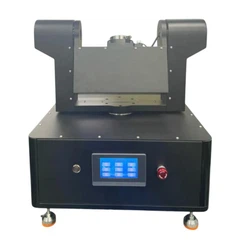
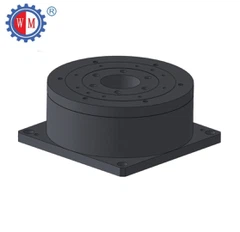
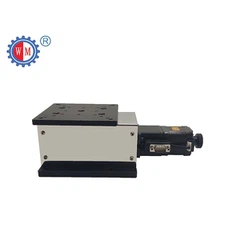
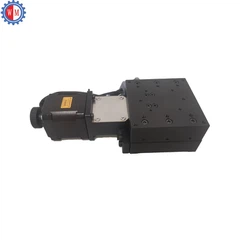
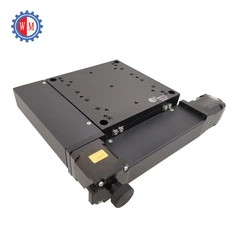
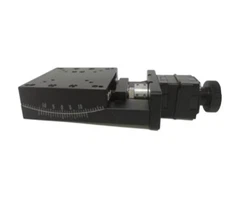
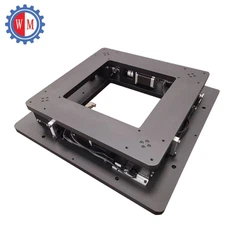
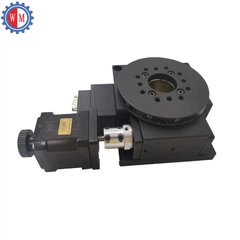
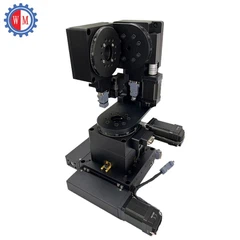
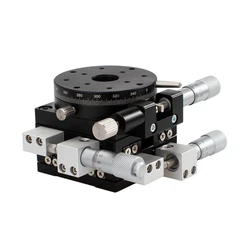
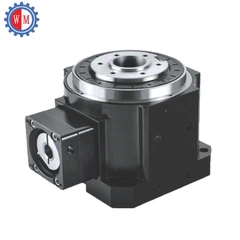
First off, let's understand what a Manual Stage is. A Manual Stage is a device that allows for precise positioning of an object in one or more directions. It's typically operated by hand, using knobs or screws to move the stage along a specific axis. These stages come in various types, such as linear stages, rotary stages, and goniometer stages, each designed for different types of movement.
Now, when it comes to optical applications, precision is key. Optical setups often require accurate positioning of components like lenses, mirrors, and detectors to ensure proper alignment and optimal performance. So, can a Manual Stage meet these precision requirements? The answer is a resounding yes!
One of the main advantages of using a Manual Stage in optical applications is its simplicity. Unlike automated stages that rely on motors and complex control systems, Manual Stages are straightforward to operate. You don't need to worry about programming or calibrating motors; you just turn the knobs to move the stage to the desired position. This simplicity makes Manual Stages a great choice for small-scale optical setups or for applications where quick adjustments are needed.
Another benefit of Manual Stages is their cost-effectiveness. Automated stages can be quite expensive, especially those with high precision and advanced features. In contrast, Manual Stages are generally more affordable, making them accessible to a wider range of users, including students, hobbyists, and small research labs.
In terms of precision, modern Manual Stages are capable of achieving high levels of accuracy. Many Manual Stages have fine-threaded screws or micrometer heads that allow for precise adjustments in the order of micrometers or even nanometers. This level of precision is sufficient for most optical applications, such as aligning lenses in a microscope or positioning a detector in a spectroscopy setup.
Let's take a closer look at some specific optical applications where Manual Stages can be used.
Microscopy
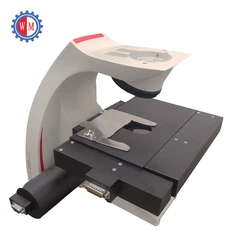
In microscopy, Manual Stages are commonly used to position the sample under the microscope objective. By using a linear Manual Stage, you can move the sample horizontally in the X and Y directions to view different areas of the sample. A rotary Manual Stage can also be used to rotate the sample for different viewing angles. The precision of the Manual Stage ensures that the sample is accurately positioned, allowing for clear and detailed imaging.
Laser Alignment
Laser alignment is another important optical application where Manual Stages play a crucial role. In a laser system, components such as mirrors and lenses need to be precisely aligned to ensure that the laser beam travels in the desired direction. Manual Stages can be used to adjust the position and orientation of these components, allowing for fine-tuning of the laser alignment. The ability to make small, incremental adjustments using the Manual Stage is essential for achieving optimal laser performance.
Spectroscopy
In spectroscopy, Manual Stages are used to position detectors and other optical components. For example, in a Raman spectroscopy setup, a Manual Stage can be used to move the sample to the focal point of the laser beam and to align the detector with the scattered light. The precision of the Manual Stage ensures that the detector captures the maximum amount of light, resulting in accurate and reliable spectroscopic measurements.
Interferometry
Interferometry is a technique used to measure small distances and changes in optical path length. Manual Stages can be used in interferometry setups to position the optical components, such as mirrors and beam splitters, with high precision. By adjusting the position of these components using the Manual Stage, the interference pattern can be optimized, allowing for accurate measurements.
Now, let's talk about some considerations when using Manual Stages for optical applications.
Stability
Stability is crucial in optical applications to ensure that the components remain in the desired position. When using a Manual Stage, it's important to choose a stage that is rigid and has good stability. Look for stages that are made of high-quality materials, such as aluminum or stainless steel, and have a solid construction. Additionally, make sure that the stage is properly mounted on a stable surface, such as an Aluminum Optical Breadboard, to minimize vibrations and movement.
Repeatability
Repeatability is another important factor to consider. In optical applications, you may need to make the same adjustments multiple times. A Manual Stage with good repeatability will allow you to return to the same position accurately, ensuring consistent results. Look for stages that have a high level of repeatability, typically specified in terms of micrometers or nanometers.
Compatibility
It's also important to ensure that the Manual Stage is compatible with the other components in your optical setup. Consider the size, weight, and mounting requirements of the stage, as well as the type of movement it provides. Make sure that the stage can be easily integrated with your existing optical components, such as lenses, mirrors, and detectors.
In conclusion, Manual Stages are a versatile and cost-effective solution for many optical applications. Their simplicity, precision, and affordability make them a popular choice among users in various fields. Whether you're a student, a researcher, or a hobbyist, a Manual Stage can help you achieve accurate and reliable results in your optical experiments.


If you're interested in purchasing a Manual Stage for your optical application, or if you have any questions about our products, please don't hesitate to contact us. We're here to help you find the right solution for your needs.
References
- "Optical Engineering Fundamentals" by Joseph M. Geary
- "Microscopy: The Complete Guide" by David B. Murphy
- "Laser Physics" by Peter W. Milonni and Joseph H. Eberly


