


Can an Integrated BLDC Motor be used in a servo system?
As a supplier of integrated BLDC motors, I often get asked whether these motors can be effectively used in servo systems. In this blog, I'll delve into the characteristics of integrated BLDC motors, the requirements of servo systems, and explore the feasibility of using integrated BLDC motors in servo applications.
Understanding Integrated BLDC Motors
An integrated BLDC (Brushless Direct Current) motor combines the motor itself with a drive unit. This integration offers several advantages. Firstly, it simplifies the overall system design. Instead of having to source and integrate a separate motor and drive, users can get a single unit that is pre - configured to work together. This reduces the complexity of wiring, installation, and troubleshooting.
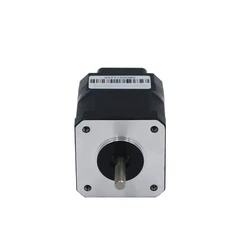
The Integrated Brushless Motor we supply comes with advanced control algorithms built into the drive. These algorithms can optimize the motor's performance, such as adjusting the speed, torque, and direction of rotation. Additionally, integrated BLDC motors are generally more compact than their non - integrated counterparts. This is especially beneficial in applications where space is limited.
Another key feature of integrated BLDC motors is their high efficiency. Unlike traditional brushed DC motors, BLDC motors do not have brushes that create friction and wear. This not only increases the motor's lifespan but also reduces energy consumption. The integrated drive further enhances efficiency by precisely controlling the motor's operation based on the load requirements.
Requirements of a Servo System
A servo system is a control system that uses feedback to accurately control the position, velocity, or acceleration of a mechanical system. The main components of a servo system typically include a servo motor, a servo drive, a controller, and a feedback device (such as an encoder).
One of the primary requirements of a servo system is high precision. The system needs to be able to position the load accurately, often within a very small tolerance. For example, in a robotic arm application, the servo system must be able to move the arm to a specific position with high repeatability.
Servo systems also require high dynamic performance. They need to be able to respond quickly to changes in the control signal. This means that the motor should be able to accelerate and decelerate rapidly, and the drive should be able to adjust the motor's output accordingly.
In addition, servo systems need to have good torque control. The torque output of the motor should be proportional to the control signal, and the system should be able to maintain a constant torque even under varying loads.
Feasibility of Using Integrated BLDC Motors in Servo Systems
Now, let's analyze whether integrated BLDC motors can meet the requirements of a servo system.
Precision: Integrated BLDC motors can achieve high precision when used in a servo system. Many integrated BLDC motors are equipped with high - resolution encoders as feedback devices. These encoders can provide accurate position and speed information to the drive, allowing the system to control the motor's operation precisely. The built - in control algorithms in the integrated drive can also compensate for any errors, ensuring that the motor reaches the desired position accurately.
Dynamic Performance: Integrated BLDC motors have excellent dynamic performance. Their high - speed response capabilities allow them to accelerate and decelerate rapidly, which is crucial for servo applications. The integrated drive can quickly adjust the motor's voltage and current based on the feedback from the encoder, enabling the motor to respond to changes in the control signal in a timely manner.
Torque Control: Integrated BLDC motors offer good torque control. The drive can precisely regulate the current flowing through the motor windings, which in turn controls the torque output. This allows the servo system to maintain a constant torque even when the load changes, ensuring stable operation.
However, there are also some challenges when using integrated BLDC motors in servo systems. One of the main challenges is the compatibility with existing servo controllers. Some servo controllers are designed specifically for traditional servo motors, and they may need to be re - configured or replaced to work with integrated BLDC motors.
Another challenge is the software and programming. The integrated drive of the BLDC motor may have its own set of software and programming requirements. Users need to have a good understanding of these requirements to optimize the performance of the servo system.
Applications of Integrated BLDC Motors in Servo Systems
Despite the challenges, integrated BLDC motors are being increasingly used in various servo applications.


In the field of robotics, integrated BLDC motors can be used to power the joints of robotic arms. Their high precision and dynamic performance allow the robotic arms to perform complex tasks with high accuracy. For example, in a pick - and - place application, the robotic arm needs to quickly and accurately pick up an object from one location and place it in another. Integrated BLDC motors can provide the necessary control and performance for such tasks.
In the medical equipment industry, servo systems are used in devices such as surgical robots and infusion pumps. Integrated BLDC motors can be used in these systems due to their compact size, high efficiency, and precision control. For example, in a surgical robot, the servo system needs to be able to move the surgical instruments with high precision to minimize the risk of damage to the patient.
In the aerospace and defense sector, servo systems are used in aircraft control surfaces, missile guidance systems, etc. Integrated BLDC motors can offer the high performance and reliability required in these applications. Their high - efficiency operation is also beneficial in reducing the overall power consumption of the system.
Conclusion
In conclusion, integrated BLDC motors can be used in servo systems. They offer many advantages such as high precision, excellent dynamic performance, and good torque control. However, users need to be aware of the challenges such as compatibility with existing controllers and software programming.
If you are considering using an integrated BLDC motor in your servo system, I encourage you to contact us for more information. Our team of experts can provide you with detailed technical support and help you choose the most suitable Brushless Dc Motor with Integrated Drive for your application. We can also assist you in the installation, configuration, and optimization of the servo system to ensure that it meets your specific requirements. Whether you are in the robotics, medical, aerospace, or any other industry, we are here to help you make the most of integrated BLDC motors in your servo applications.
References
- "Brushless DC Motor Systems: Analysis, Modeling, and Control" by Dr. D. Casadei, G. Serra, and A. Tani.
- "Servo Motors and Industrial Control Theory" by J. D. Conner.
- Technical documentation from various motor manufacturers on integrated BLDC motors and servo systems.


