
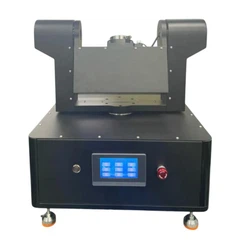
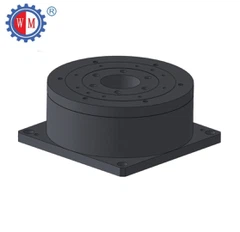


Can a motorized rotary table be used for woodworking? This is a question that many woodworkers and enthusiasts often ponder. As a supplier of Motorized Rotary Table, I'm here to provide a comprehensive answer and shed light on the potential of motorized rotary tables in the woodworking industry.
Understanding Motorized Rotary Tables
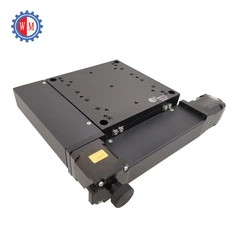
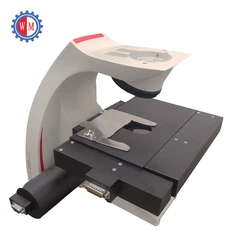
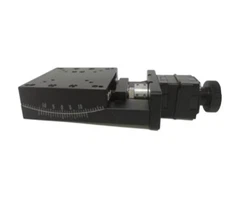
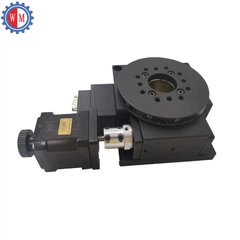
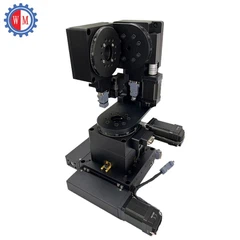
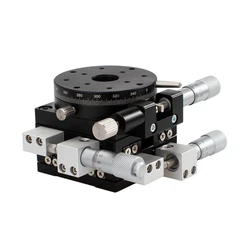
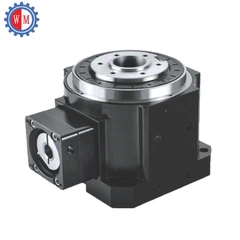
Before delving into their application in woodworking, let's first understand what motorized rotary tables are. A motorized rotary table is a precision device that allows for controlled rotation of a workpiece. It is typically equipped with a motor that drives the rotation, enabling accurate positioning and movement. These tables come in various sizes, capacities, and precision levels, making them suitable for a wide range of applications.
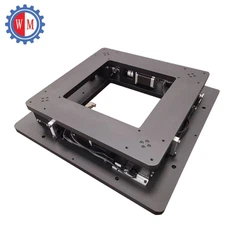
There are different types of motorized rotary tables available in the market. For instance, Heavy Load Rotary Positioning Stages are designed to handle large and heavy workpieces, providing stability and precision even under significant loads. On the other hand, Precision Optical Motorized Rotation Stage offer extremely high levels of accuracy, making them ideal for applications that require fine adjustments and precise positioning.
Advantages of Using Motorized Rotary Tables in Woodworking
- Enhanced Precision
One of the primary advantages of using a motorized rotary table in woodworking is the ability to achieve high levels of precision. Woodworking often involves creating complex shapes, curves, and angles. With a motorized rotary table, you can precisely control the rotation of the workpiece, ensuring that each cut or operation is performed with accuracy. This precision is particularly crucial when working on projects that require tight tolerances, such as inlays, dovetail joints, or decorative turning. - Increased Efficiency
Motorized rotary tables can significantly increase the efficiency of woodworking operations. By automating the rotation process, you can reduce the time and effort required to manually position the workpiece. This allows you to complete projects more quickly and with less fatigue. Additionally, the ability to program specific rotation angles and speeds enables you to perform repetitive tasks with consistency, further improving productivity. - Versatility
Motorized rotary tables offer a high degree of versatility in woodworking. They can be used with a variety of woodworking tools, such as routers, lathes, and mills. This means that you can use the same rotary table for different types of operations, depending on your project requirements. Whether you're creating small, intricate pieces or large, structural components, a motorized rotary table can adapt to your needs. - Complex Design Capabilities
Woodworkers are often looking to push the boundaries of design and create unique, one-of-a-kind pieces. Motorized rotary tables enable you to explore more complex design possibilities. You can create multi - faceted objects, helical patterns, and asymmetrical shapes that would be difficult or impossible to achieve manually. This opens up new creative opportunities and allows you to showcase your skills as a woodworker.
Applications of Motorized Rotary Tables in Woodworking
- Turning Operations
In woodturning, a motorized rotary table can be used to create complex shapes and patterns on the lathe. For example, you can use it to create spiral grooves, multi - step tapers, or decorative fluting. By controlling the rotation speed and angle, you can achieve consistent and precise results, enhancing the aesthetic appeal of your turned pieces. - Routing Operations
When using a router, a motorized rotary table can be invaluable for creating circular or curved cuts. You can mount the workpiece on the rotary table and use the router to cut precise arcs, circles, or scallops. This is particularly useful for creating table tops, cabinet doors, or decorative trim. The ability to control the rotation of the workpiece ensures that the cuts are smooth and accurate. - Joinery
In joinery, motorized rotary tables can assist in creating strong and precise joints. For example, when making dovetail joints, you can use the rotary table to accurately position the workpiece for cutting the pins and tails. This helps to ensure a perfect fit and a strong joint. Similarly, for mortise and tenon joints, the rotary table can be used to align the workpiece for accurate cutting, resulting in a tight and durable connection. - Inlay Work
Inlay work involves inserting different types of wood or other materials into a base piece to create decorative patterns. A motorized rotary table can be used to precisely position the inlay pieces, ensuring that they fit together perfectly. You can rotate the workpiece to align the inlay with the base piece and make accurate cuts, resulting in a seamless and professional - looking inlay.
Considerations When Using Motorized Rotary Tables in Woodworking
- Load Capacity
It's important to consider the load capacity of the motorized rotary table when working with wood. Different tables have different weight limits, and you need to ensure that the table can handle the size and weight of your workpiece. Overloading the table can lead to inaccurate positioning, reduced performance, and even damage to the table. - Precision Requirements
The level of precision required for your woodworking project will determine the type of motorized rotary table you need. If you're working on high - precision projects, such as fine furniture or intricate inlay work, you'll need a table with a high degree of accuracy. On the other hand, for more general woodworking tasks, a table with a lower precision level may be sufficient. - Compatibility with Tools
Make sure that the motorized rotary table is compatible with the woodworking tools you plan to use. Check the mounting options, the size of the table, and the power requirements to ensure that it can be integrated seamlessly into your existing setup. - Safety
As with any woodworking equipment, safety is paramount when using a motorized rotary table. Follow all safety guidelines provided by the manufacturer, including wearing appropriate protective gear, such as safety glasses and gloves. Make sure that the table is properly installed and secured before use, and never leave the equipment unattended while it is in operation.
Conclusion
In conclusion, a motorized rotary table can be a valuable tool in woodworking. It offers numerous advantages, including enhanced precision, increased efficiency, versatility, and the ability to create complex designs. With a wide range of applications in turning, routing, joinery, and inlay work, a motorized rotary table can help woodworkers take their projects to the next level.
If you're a woodworker looking to improve your precision, efficiency, and creative capabilities, I encourage you to consider investing in a motorized rotary table. As a supplier, we offer a variety of high - quality motorized rotary tables to meet your specific needs. Whether you're a hobbyist or a professional woodworker, our products can provide the performance and reliability you require.
If you're interested in learning more about our Motorized Rotary Table or have any questions about their application in woodworking, please don't hesitate to contact us. We're here to assist you in finding the right solution for your woodworking projects and to support you throughout the purchasing process. Let's work together to enhance your woodworking experience and bring your creative visions to life.


References
- Woodworking Machinery Handbook, various editions
- Journal of Woodworking Technology, multiple issues
- Manufacturer's manuals for motorized rotary tables


