

Mechanical Design & Axis Configuration
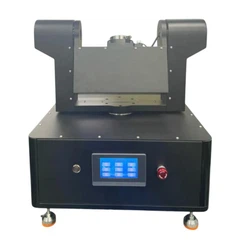
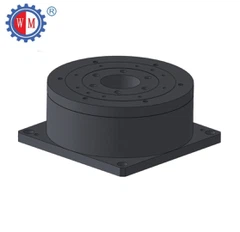
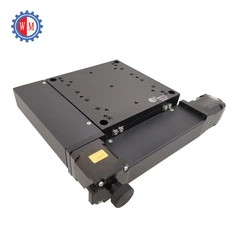
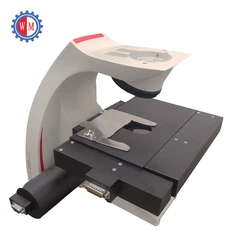
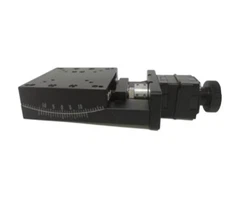
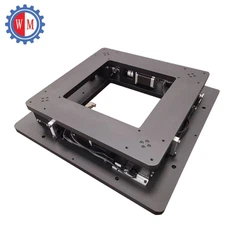
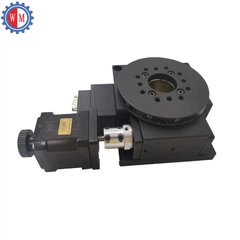
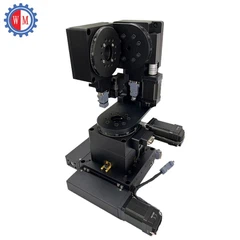
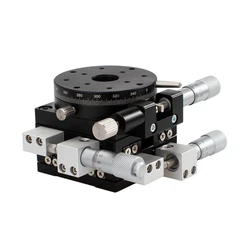
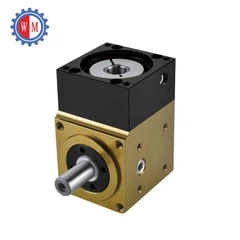
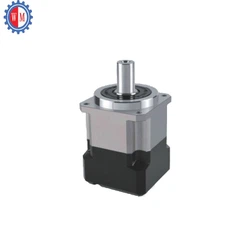
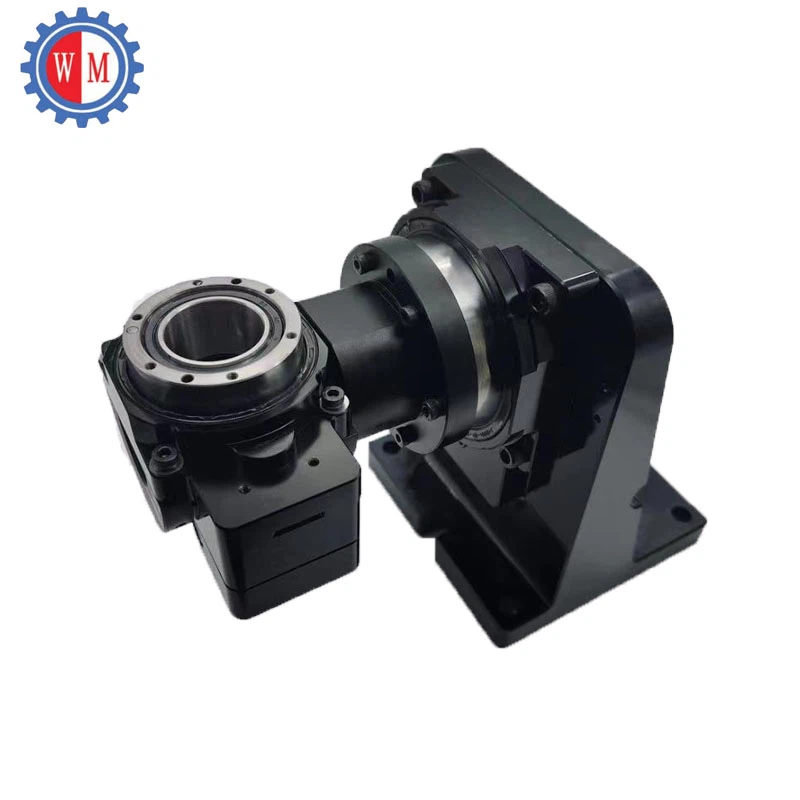
The motorized gimbal stage typically features two or three orthogonal axes-often labeled azimuth, elevation, and sometimes roll-that intersect at a common center of rotation. This geometry is what sets the motorized gimbal stage apart from standard pan-tilt units or stacked rotary stages. In practice, the motorized gimbal stage ensures that a laser beam or telescope line of sight remains centered during complex maneuvers. Manufacturers design the motorized gimbal stage with high-stiffness bearings, direct-drive motors, or precision stepper/servo combinations, and high-resolution encoders to achieve sub-second positioning. Load capacities for the motorized gimbal stage range from a few grams for ultra-light optical mounts to several kilograms for larger aerospace payloads, making the motorized gimbal stage versatile across scales.
Development History & Technical Evolution
Historically, the motorized gimbal stage evolved from early mechanical gimbals used in naval stabilization and aircraft attitude control. The transition to motorized versions accelerated in the late twentieth century with the rise of photonics and semiconductor fabrication. Today, the motorized gimbal stage incorporates brushless DC motors, piezoelectric options for the highest-resolution applications, and advanced firmware that compensates for thermal drift and backlash. When selecting the motorized gimbal stage, engineers evaluate torque-to-inertia ratios, settling time, and bidirectional repeatability. The motorized gimbal stage must also meet environmental demands such as vacuum compatibility for space simulation chambers or cleanroom ratings for semiconductor inspection.

Key Industry Applications
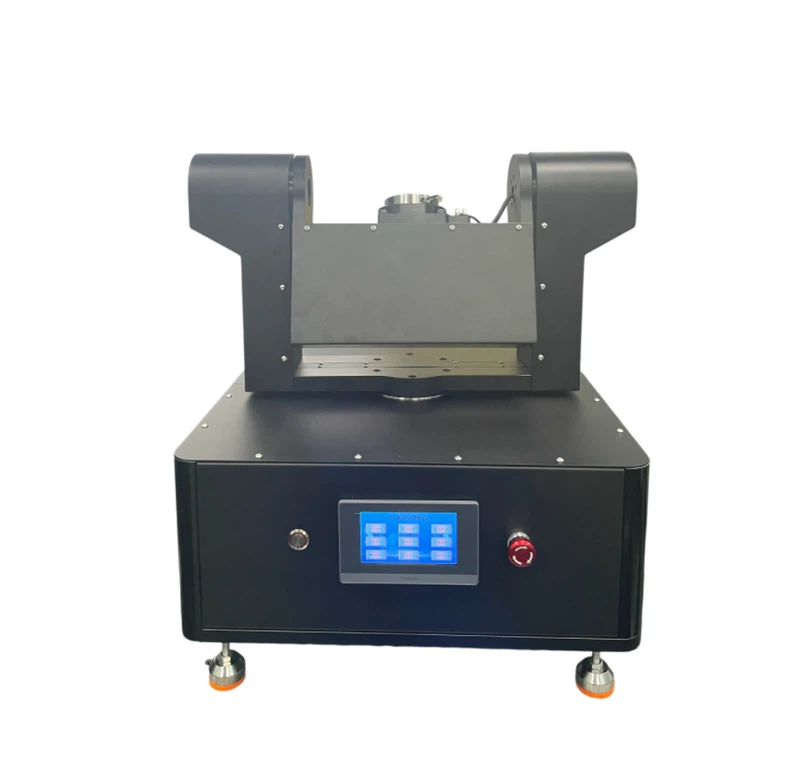
Applications of the motorized gimbal stage span defense, aerospace, medical imaging, and research laboratories. In directed-energy systems, the motorized gimbal stage steers high-power laser beams with extreme precision to maintain target lock over long distances. The motorized gimbal stage is equally vital in satellite testing facilities, where it replicates orbital attitude adjustments during thermal vacuum cycling. Optical communication terminals depend on the motorized gimbal stage to acquire and track fast-moving satellites in low-Earth orbit. In the semiconductor sector, the motorized gimbal stage aligns wafers and reticles during lithography processes that demand nanometer-level overlay accuracy. Even in biomedical instrumentation, the motorized gimbal stage enables confocal microscopy stages to scan tissue samples without introducing vibration or drift.
Control, Synchronization & System Integration
One of the primary advantages of the motorized gimbal stage is its ability to synchronize with external triggers and feedback loops. Modern motion controllers pair with the motorized gimbal stage to support trapezoidal, S-curve, or custom velocity profiles that minimize jerk and overshoot. Software suites allow users to program the motorized gimbal stage via LabVIEW, Python, or proprietary APIs, streamlining automation in production lines. The motorized gimbal stage also supports daisy-chaining with linear stages, creating full six-degree-of-freedom systems when combined with hexapods or XYZ platforms. This modularity explains why the motorized gimbal stage appears in nearly every high-end photonics workbench.
Key Specifications
When evaluating the motorized gimbal stage for a specific project, key specifications include angular range, maximum speed, resolution, repeatability, and wobble. A typical high-end motorized gimbal stage might offer ±90° on the inner axis and ±45° on the outer axis, with speeds reaching 30 degrees per second and resolution up to 0.0001°. The motorized gimbal stage's encoder feedback-whether incremental or absolute-ensures closed-loop operation that corrects for mechanical imperfections. Payload-induced deflection must be minimized; therefore, the motorized gimbal stage often incorporates finite-element analysis during design to keep Abbe errors below measurable thresholds. For vacuum or cryogenic environments, the motorized gimbal stage uses specialized lubricants and materials that prevent outgassing or thermal contraction issues.
Integration & Calibration
Integration challenges with the motorized gimbal stage are routinely addressed through careful cable management and EMI shielding. Because the motorized gimbal stage rotates continuously in some configurations, slip rings or wireless data transmission keep power and signals intact. Calibration routines for the motorized gimbal stage involve laser autocollimators or interferometers to map and compensate for any residual errors. Once calibrated, the motorized gimbal stage maintains long-term stability, often exceeding 24 hours of continuous operation without recalibration. This reliability makes the motorized gimbal stage the backbone of 24/7 production tools in fiber-optic component manufacturing.
Drive Technologies & Advanced Control
Looking deeper into the technology, the motorized gimbal stage can employ either stepper motors for cost-effective open-loop control or servo motors for high-dynamic performance. Piezo-driven motorized gimbal stage variants achieve nanometer-level angular steps with response times under a millisecond, ideal for active vibration cancellation or fast beam steering. Hybrid designs combine coarse stepper motion with fine piezo adjustment within the same motorized gimbal stage assembly. Advanced controllers now embed machine-learning algorithms that predict and preempt thermal or load-induced drift, further enhancing the motorized gimbal stage's performance envelope.
Aerospace & Autonomous Vehicle Testing
In the aerospace sector, the motorized gimbal stage simulates flight dynamics for inertial navigation system testing. Engineers mount gyroscopes or star trackers on the motorized gimbal stage and subject them to realistic pitch, roll, and yaw profiles. The motorized gimbal stage's low wobble and high stiffness ensure that test data accurately reflect real-world behavior. Similarly, in autonomous vehicle development, the motorized gimbal stage calibrates LiDAR and camera sensors by sweeping them through precise angular patterns that mimic road conditions. The motorized gimbal stage thus accelerates development cycles while reducing reliance on expensive outdoor test tracks.
Medical & Research Applications
Medical device manufacturers incorporate the motorized gimbal stage into robotic surgery platforms and diagnostic imaging equipment. The motorized gimbal stage provides the smooth, tremor-free motion required for laser-based eye surgery or precise radiation therapy beam delivery. Because patient safety depends on sub-millimeter accuracy, the motorized gimbal stage's built-in safety interlocks and redundant encoders are non-negotiable. In university research labs, the motorized gimbal stage supports experiments ranging from quantum optics to gravitational wave detection, where even the smallest angular misalignment can invalidate results.
Selection & Customization
Choosing the right motorized gimbal stage requires balancing performance, cost, and lead time. Entry-level motorized gimbal stage models from established vendors offer respectable resolution for teaching laboratories, while premium motorized gimbal stage systems with active metrology deliver the ultra-precision demanded by national laboratories. Buyers should request detailed datasheets, third-party test reports, and demonstration units before committing to the motorized gimbal stage. Customization options for the motorized gimbal stage-such as custom mounting interfaces, extended temperature ranges, or radiation-hardened electronics-further expand its applicability.
Maintenance & Reliability
Maintenance of the motorized gimbal stage is straightforward when following the manufacturer's guidelines. Periodic lubrication of bearings, verification of encoder alignment, and firmware updates keep the motorized gimbal stage operating at peak efficiency. Most motorized gimbal stage units are designed for millions of cycles, with MTBF figures exceeding 50,000 hours under normal laboratory conditions. When downtime must be minimized, modular designs allow rapid replacement of the motorized gimbal stage's drive modules without realigning the entire optical train.
Future Trends & Sustainability
Future trends point toward smarter, more compact motorized gimbal stage designs. Integration of onboard edge computing will allow the motorized gimbal stage to perform real-time path optimization and collision avoidance without external controllers. Wireless connectivity and IoT compatibility will enable remote monitoring of the motorized gimbal stage across global facilities. Additive manufacturing techniques are already reducing the weight of the motorized gimbal stage while increasing its stiffness-to-weight ratio, opening new possibilities for portable field-deployable systems. As photonics and quantum technologies advance, the motorized gimbal stage will evolve to meet demands for even finer resolution and faster response times.
Sustainability considerations are also shaping the next generation of the motorized gimbal stage. Energy-efficient motors and recyclable materials are becoming standard, reducing the carbon footprint of facilities that deploy dozens of motorized gimbal stage units. Manufacturers now offer refurbished and upgraded motorized gimbal stage programs that extend product life and minimize electronic waste. These initiatives ensure that the motorized gimbal stage remains both technologically advanced and environmentally responsible.
Conclusion
In summary, the motorized gimbal stage represents the pinnacle of precision angular control within the broader precision instruments ecosystem. From initial concept through decades of service, the motorized gimbal stage continues to enable breakthroughs that shape modern technology. Engineers who master the motorized gimbal stage gain a competitive edge in designing systems that demand the utmost accuracy and reliability. As industries push the boundaries of what is possible, the motorized gimbal stage will remain at the forefront, quietly powering the innovations of tomorrow. Whether optimizing a single research setup or scaling an entire production line, the motorized gimbal stage delivers the performance that precision demands. The motorized gimbal stage is, without question, a cornerstone technology that will continue to evolve alongside the ever-increasing requirements of high-technology applications worldwide.


