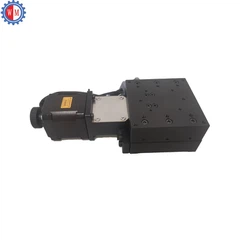
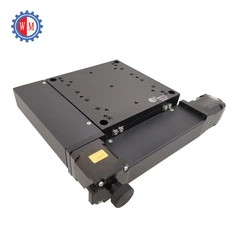
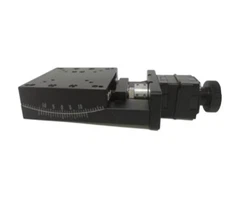
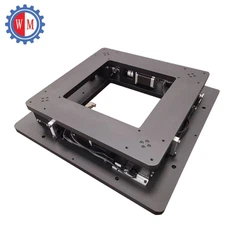
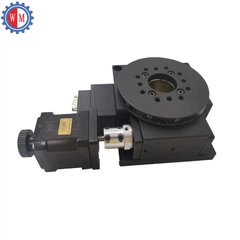
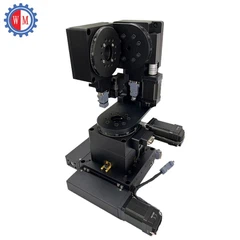
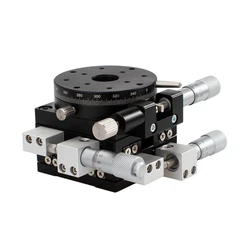


What are the motorized linear stages?
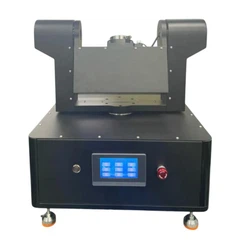
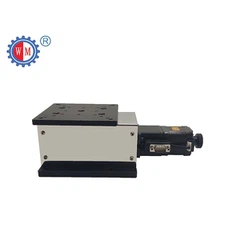
Motorized linear stages are devices that are driven by motors and achieve linear motion. They are widely used in various fields that require precise positioning and motion control.
Types of Motorized linear stages
Email:Linda@wan-ming.com Call Us:+8613145803761

Ball screw driven linear stages
Ball screws convert the motor's rotary motion into linear motion. They have high precision and load-bearing capacity, and are suitable for applications that require high-speed and high-precision motion.
Linear motor-driven linear stages
As mentioned earlier, it is a linear motor that directly converts electrical energy into linear mechanical motion and has the characteristics of high precision, high speed, and good dynamic performance.
BBelt-driven linear stages
Belts are used to transmit power. They have high speed and low noise, and are suitable for applications that require fast motion and large stroke motion.
Components of Motorized Linear Stages
Motor
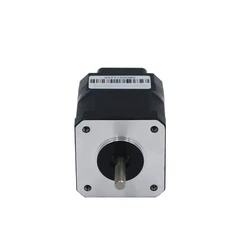
The power source of the linear stage, usually including stepper motors, servo motors,
etc. Stepper motors are suitable for applications that require low-speed and high-torque, while servo motors are suitable for applications that require high-precision and high-speed motion control.
Guide rails
Ensure the linear motion of the moving part with high precision and stability, usually including linear rolling guide rails, sliding guide rails, etc.

Positioning sensors
Such as optical encoders, magnetic encoders, etc., which are used to detect the position of the moving part in real-time and provide feedback signals to the control system to achieve precise position control.
Control system
Controls the operation of the motorized linear stage, including setting motion parameters such as speed, acceleration, and position, and achieving closed-loop control through feedback signals from positioning sensors.
The working principle of the motorized linear stages

• Output signal
The user sends the target position or speed command through the controller.
• Motor drive
The controller converts electrical signals into the rotational actions of the motor.
• Transmission transformation
The rotational motion of the motor is converted into precise linear motion through lead screws or other transmission methods.
• Feedback regulation
The encoder monitors the actual position in real time and feeds the data back to the controller for correction, thereby achieving the purpose of high-precision control.
Application of motorized linear stages
Industrial manufacturing: It is used for the precise positioning and transportation of workpieces in automated production lines, such as in the assembly of electronic products and the processing of mechanical parts.
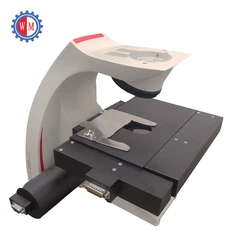
Scientific research: It is widely used in scientific research equipment such as microscopes, spectrometers, X-ray diffractometers, microscope focusing, and telescope tracking to achieve precise adjustment of the position of samples or optical components.
Medical equipment: Applied in medical imaging devices such as CT scanners and MRI machines to precisely locate patients. They are also used in some medical treatment devices to achieve precise movement and positioning.
Aerospace and defense: Precise positioning and alignment for the manufacturing and testing of aircraft and spacecraft components. In addition, they are also used in some military equipment to achieve precise aiming and positioning.


