
1. Definition and Function
Basic Concept
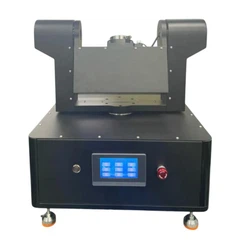
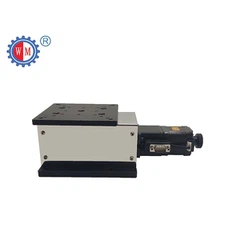
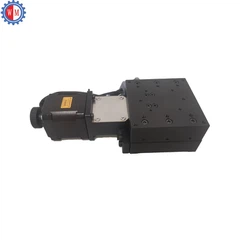
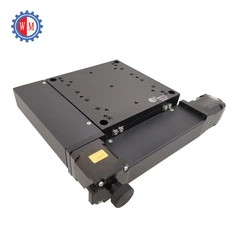
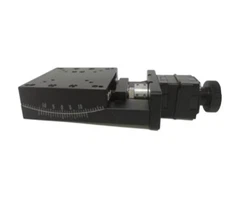
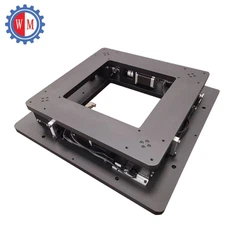
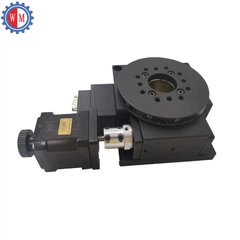
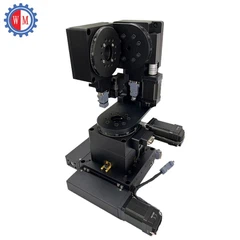
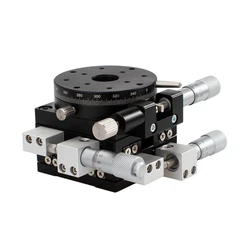
The Motorized Linear Stage is a worktable that can move precisely in a straight line, usually driven by a motor and equipped with a precision rail system.
It is used to achieve high-precision position control and is often combined with an encoder for position feedback.
Application Scenarios
Semiconductor manufacturing: used for wafer cutting, inspection, and packaging equipment.
Optical system: adjust the position of the lens or mirror to achieve focusing or calibration.
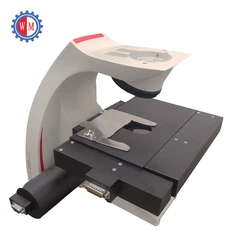
Biomedicine: used for cell manipulation or drug screening under a microscope.
Industrial Automation: achieve precise positioning of the end of the robot arm.
2. Key Technical Parameters
Travel Range
Varies from a few millimeters to several meters, depending on application requirements.
Resolution
Depends on the drive mechanism (stepper motor, servo motor, or voice coil motor).
High-end products can achieve nanometer-level resolution.
Load Capacity
From a few grams to hundreds of kilograms, depending on the size and material design of the platform.
Speed and Acceleration
The maximum speed is usually between 0.1 and 100 mm/s.
Acceleration affects dynamic performance, especially at high speeds.
Repeatability
Indicates the ability to return to the same position after repeated motions, generally at the μm level.
3. Main drive mode
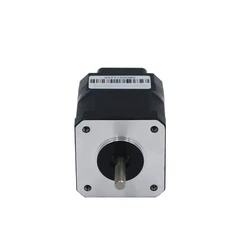
Stepper motor
Advantages: Low cost, easy to control.
Disadvantages: Closed-loop control is required to improve accuracy.
Servo motor
Advantages: Fast dynamic response, suitable for high-speed applications.
Disadvantages: Higher cost.
Voice coil motor
Advantages: High speed and high accuracy.
Disadvantages: High cost and limited travel.
Piezoelectric actuator
Advantages: Extremely high resolution (nanometer level).
Disadvantages: Small load capacity.
4. Key components
Guide system
Linear ball guide or air bearing guide.
Determines the stability and life of the platform.
Encoder
An optical or magnetic encoder is used for real-time position feedback.
Resolution directly affects the final accuracy.
Controller
Provides motion planning and speed control.
Supports multiple protocols (such as RS-232, EtherCAT, etc.).
5. Market Trends
Technological Innovation
Higher precision and faster speed have become mainstream demands.
Integrate more intelligent functions (such as self-diagnosis, remote monitoring).
Cost Pressure
The mid- and low-end markets are price-sensitive, driving the development of low-cost solutions.
The high-end market focuses more on performance optimization.
Environmental Protection Requirements
Stricter energy efficiency standards have prompted manufacturers to adopt energy-saving designs.
Reduce mechanical wear and noise pollution.


