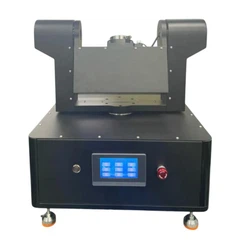
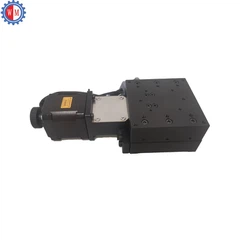
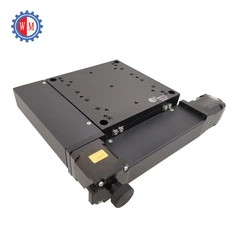
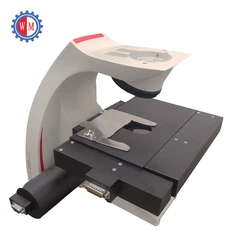
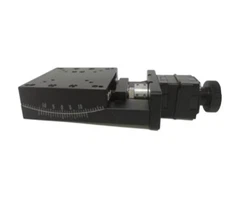


Hey there! As a supplier of motorized lift stages, I often get asked about the materials used to make these nifty pieces of equipment. So, I thought I'd take a deep dive into this topic and share all the juicy details with you.
Let's start with the frame. The frame is like the backbone of the motorized lift stage, providing structural support and stability. One of the most commonly used materials for frames is aluminum. Aluminum is lightweight, which makes the stage easier to move around and install. It's also corrosion-resistant, so it can withstand different environmental conditions without rusting or deteriorating. This is especially important if the stage is going to be used in a laboratory or industrial setting where there might be exposure to chemicals or moisture.
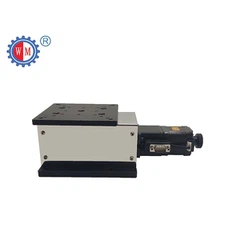
Another great thing about aluminum is its high strength-to-weight ratio. This means that even though it's light, it can still support a decent amount of weight. For example, in a Precision Motorized Vertical Lift Stage, the aluminum frame can hold the motor, the lifting mechanism, and the load being lifted without bending or breaking.
Steel is another option for the frame. Steel is much heavier than aluminum, but it's also incredibly strong. It can handle much higher loads, making it a great choice for heavy-duty applications. If you need a stage that can lift large and heavy objects, like in an industrial manufacturing plant, a steel-framed motorized lift stage would be a better fit. However, the weight of steel can be a drawback in some situations, as it might require more powerful motors to move the stage and can be more difficult to transport.
Now, let's talk about the moving parts. The lead screw is a crucial component in a motorized lift stage. It's responsible for converting the rotational motion of the motor into linear motion, which is what makes the stage go up and down. Lead screws are typically made of stainless steel. Stainless steel is strong and has good wear resistance, which means it can withstand the constant friction and movement without wearing out quickly. This ensures the long-term accuracy and reliability of the stage.


The nuts that work with the lead screws are often made of bronze. Bronze is a soft metal, but it has excellent self-lubricating properties. This reduces the friction between the nut and the lead screw, making the movement smoother and more efficient. It also helps to extend the lifespan of both the nut and the lead screw.
For the bearings, which support the rotating parts of the motor and the lead screw, steel or ceramic materials are commonly used. Steel bearings are cost-effective and have good load-carrying capacity. They can handle the radial and axial loads generated during the operation of the stage. Ceramic bearings, on the other hand, are more expensive but offer some significant advantages. They are lighter, harder, and more resistant to corrosion than steel bearings. They also have lower friction, which means less energy is wasted during operation, and the stage can run more quietly.
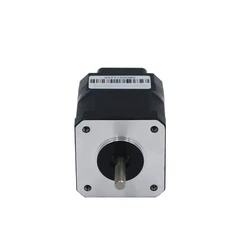
The motor is the heart of the motorized lift stage. Most motors used in these stages are made with a combination of materials. The stator, which is the stationary part of the motor, is usually made of laminated steel. The laminations help to reduce eddy current losses, which improves the efficiency of the motor. The rotor, the rotating part, can be made of various materials, including permanent magnets made of neodymium iron boron (NdFeB). NdFeB magnets are very strong, which allows the motor to generate more torque and power.
The housing of the motor is often made of aluminum or plastic. Aluminum provides good heat dissipation, which is important because motors generate heat during operation. If the heat isn't dissipated properly, it can damage the motor and reduce its lifespan. Plastic housings are lightweight and can be molded into different shapes easily. They are also cost-effective, making them a popular choice for some applications.
In a Short Travel Motorized Vertical Positioning Stage, the choice of materials is optimized for short and precise movements. The frame might be made of a lightweight alloy to keep the overall weight down, while the lead screw and nuts are designed for high precision. This allows for accurate positioning of the load, which is crucial in applications like microscopy or semiconductor manufacturing.
For a High Precision Motorized Z Axis Stage, the materials are selected for their ability to provide extremely accurate and repeatable movements. The lead screws are often ground to a very high precision, and the bearings are carefully chosen to minimize any play or backlash. This ensures that the stage can move up and down with micron-level accuracy, which is essential in industries like nanotechnology and precision machining.
So, as you can see, the choice of materials for a motorized lift stage depends on a variety of factors, including the application, the load capacity, the required precision, and the environmental conditions. At our company, we carefully select the materials for each stage to ensure that it meets the highest standards of quality and performance.
If you're in the market for a motorized lift stage, whether it's for a research laboratory, an industrial production line, or any other application, we'd love to talk to you. We can help you choose the right stage based on your specific needs and budget. Just reach out to us, and we'll start the conversation.
References
- Engineering Materials Handbook, ASM International
- Motor Design and Application Guide, IEEE Press


