
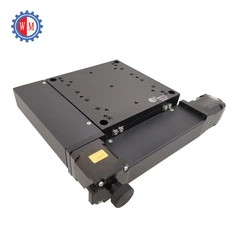
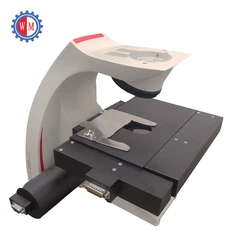
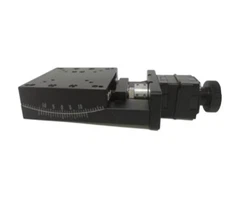
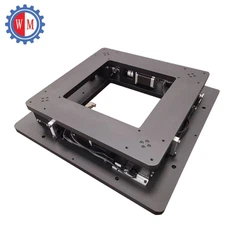


Hey there! As a supplier of Manual X - Axis Stages, I often get asked about a crucial factor: what is the travel distance of Manual X - Axis Stages? In this blog, we're going to dig deep into this topic, so you'll have a solid understanding by the time you finish reading.
First off, let's get a basic idea of what a Manual X - Axis Stage is. It's a device that allows for controlled movement along the X - axis manually. These stages are used in various applications, including microscopy, photonics, and precision manufacturing. Their ability to provide accurate linear motion in one direction makes them indispensable in these fields.
Now, onto the travel distance. The travel distance of Manual X - Axis Stages can vary significantly based on different factors, and it's not a one - size - fits - all situation.
Factors Affecting Travel Distance
Mechanical Design
The mechanical design of a Manual X - Axis Stage plays a huge role in determining its travel distance. For instance, stages with a simple screw - driven mechanism might have a travel distance ranging from a few millimeters to a couple of centimeters. This is because the length of the screw limits how far the stage can move. The design also has to balance between stability and the ability to move smoothly, and longer travel distances could potentially make the stage less stable.
On the other hand, some more advanced designs, like those with a linear guide and a high - precision drive system, can offer much larger travel distances. Manufacturers can optimize the guide and the drive mechanism to ensure reliable and smooth motion over a longer range. For example, in some industrial applications where large - scale positioning is required, we can see Manual X - Axis Stages with travel distances of up to 500 millimeters or even more.
Application Requirements
The intended application of the Manual X - Axis Stage is another major factor. In some laboratory setups, especially in microscopy or small - scale optical experiments, a short travel distance of around 10 - 50 millimeters might be sufficient. Scientists or researchers only need to move samples or optical components slightly to observe different areas or perform specific measurements.
In contrast, in the manufacturing industry, especially for tasks like precision machining or assembly, longer travel distances are often required. For example, when assembling large electronic components, a Manual X - Axis Stage with a travel distance of 100 - 300 millimeters could be needed to position parts accurately.
Load Capacity
The load capacity of the stage also affects its travel distance. If a stage is designed to carry heavy loads, the travel distance might be more limited. This is because the mechanical components of the stage need to be stronger and more rigid to support the load, which can restrict the range of motion. For light - load applications, the stage can be designed with a more flexible structure, allowing for a greater travel distance.
Common Travel Distance Ranges
Let's break down the common travel distance ranges of Manual X - Axis Stages based on their typical applications.
Short - Range Stages
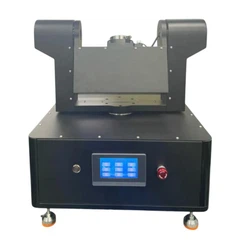
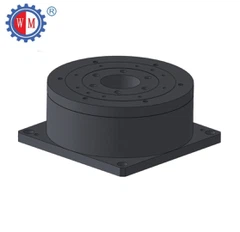
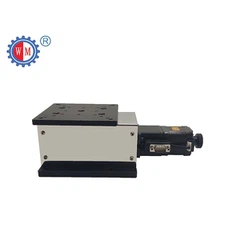
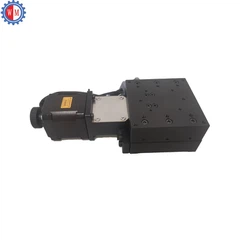
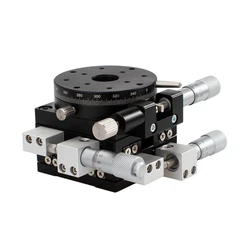
Short - range Manual X - Axis Stages usually have a travel distance of up to 50 millimeters. These are great for applications that require fine - tuning and precise control over a small area. For example, in biological microscopy, you might only need to move a slide a short distance to focus on different cells or structures. The Single - Axis Manual Translation Stage is a good option in this category. It offers high precision and a short but accurate travel distance, making it ideal for laboratory use.
Medium - Range Stages
Medium - range stages typically have a travel distance between 50 and 200 millimeters. These are suitable for applications that need a bit more movement, like small - scale automation or testing of electronic components. The Manual X Axis Adjustable Stage falls into this category. With its adjustable features and a reasonable travel distance, it can be used in a variety of settings where moderate positioning is required.
Long - Range Stages
Long - range Manual X - Axis Stages have a travel distance of over 200 millimeters. These are used in industrial applications where large - scale movement is necessary, such as in the production of large machinery parts or in some types of 3D printing. The Manual X Translation Stage can be a great choice for these scenarios, offering a long travel distance while still maintaining good precision.
Measuring Travel Distance
When it comes to measuring the travel distance of a Manual X - Axis Stage, there are a few methods. The most straightforward way is to use a linear scale. A linear scale is attached to the stage, and as the stage moves, the scale provides a direct measurement of the distance traveled. This method is very accurate and can give you real - time information about the position of the stage.
Another method is to use an encoder. An encoder can convert the mechanical motion of the stage into an electrical signal, which can then be processed to determine the travel distance. Encoders are often more precise and can provide digital readouts, making them suitable for applications that require high - level accuracy.


Choosing the Right Travel Distance
So, how do you choose the right travel distance for your Manual X - Axis Stage? Well, it all boils down to your specific needs. First, think about your application. If you're working in a laboratory and only need to make small adjustments, a short - range stage will be more than enough. But if you're in an industrial setting where large - scale movement is required, you'll need a long - range stage.
Also, consider your budget. Longer - range stages usually come with a higher price tag, as they often require more advanced mechanical designs and components. You don't want to over - spend on a stage with a travel distance that you'll never need, but at the same time, you don't want to buy a stage with too short a travel distance and end up being limited in your work.
As a supplier of Manual X - Axis Stages, I'm here to help you make the right choice. We have a wide range of stages with different travel distances to suit various applications. If you're not sure which one is right for you, feel free to reach out, and we can have a discussion about your specific requirements. We can guide you through the selection process and make sure you get the best stage for your needs.
In conclusion, the travel distance of Manual X - Axis Stages can vary widely depending on mechanical design, application requirements, and load capacity. By understanding these factors and knowing how to measure and choose the right travel distance, you can get the most out of your Manual X - Axis Stage. Whether you need a short - range stage for a lab experiment or a long - range stage for industrial production, we've got you covered. So, if you're interested in purchasing a Manual X - Axis Stage, don't hesitate to contact us for more information and to start a purchasing discussion.
References
- Typical Engineering Design Principles for Linear Motion Stages.
- Application - specific Requirements for Manual X - Axis Stages in Different Industries.


