
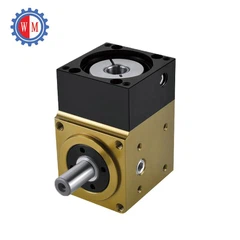
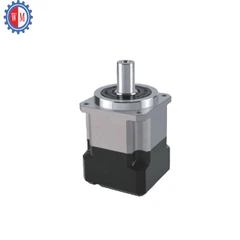


Hey there! As a supplier of right angle reducers, I often get asked about the speed regulation range of these nifty pieces of machinery. So, I thought I'd whip up a blog to chat about it and shed some light on this topic.
First off, let's quickly understand what a right angle reducer is. A right angle reducer is a type of gearbox that changes the direction of the input shaft by 90 degrees. It's super useful in a whole bunch of applications where you need to adjust the speed and torque of a motor. These reducers are used in various industries, like manufacturing, robotics, and even in some home appliances.
Now, onto the main question: what is the speed regulation range of a right angle reducer? Well, it's not a one - size - fits - all answer. The speed regulation range can vary quite a bit depending on a few factors.
One of the key factors is the type of right angle reducer. There are different types out there, such as worm gear right angle reducers, bevel gear right angle reducers, and hypoid gear right angle reducers.
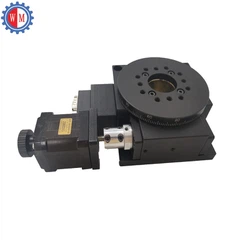
Worm gear right angle reducers are known for their high reduction ratios. They can typically offer a speed reduction range from about 5:1 to as high as 100:1 or even more in some cases. This means that if the input shaft is spinning at, say, 1000 RPM, with a 5:1 reduction ratio, the output shaft will spin at 200 RPM. And with a 100:1 ratio, the output would be a mere 10 RPM. The high reduction ratios make worm gear reducers great for applications where you need a lot of torque, like in conveyor systems or in heavy - duty machinery. You can check out more about different types of reducers like the Gear Head Speed Reducer.
Bevel gear right angle reducers, on the other hand, usually have a more limited speed reduction range, typically from around 1:1 to maybe 6:1. They're often used in applications where you need a more precise and efficient transfer of power while changing the direction. For example, in some precision manufacturing equipment or in automotive differentials, bevel gear right angle reducers play a crucial role.
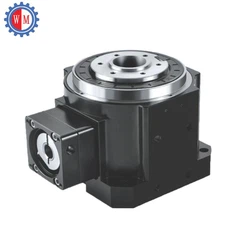
Hypoid gear right angle reducers offer a good balance between high reduction ratios and smooth operation. Their speed reduction range can be anywhere from around 5:1 to 20:1. These reducers are commonly used in applications where space is limited but you still need a decent amount of torque and speed reduction. If you're interested in a Hollow Solid Shaft Right Angle Reducer, it might fall into this category or have similar speed regulation characteristics.
Another factor that affects the speed regulation range is the quality of the reducer. Higher - quality reducers are often more precise and can offer a wider and more accurate speed regulation. Cheaper, lower - quality reducers might have some variability in their speed reduction ratios, which can lead to inconsistent performance. So, when you're looking for a right angle reducer, it's important to consider the reputation of the manufacturer and the quality of the materials used.
The load on the reducer also matters. If the reducer is under a heavy load, it might not be able to achieve the full range of speed reduction as efficiently. For example, if a worm gear reducer is rated for a certain speed reduction range under normal load conditions, but you put a much heavier load on it, you might see a decrease in its performance and a narrower effective speed regulation range.
The input speed of the motor connected to the reducer is another variable. If you have a high - speed motor, the reducer might have a different optimal speed regulation range compared to a low - speed motor. You'll need to match the input speed of the motor with the capabilities of the reducer to get the best performance.
Let's talk about some real - world applications and how the speed regulation range comes into play.
In a manufacturing plant, a conveyor belt system might use a right angle reducer to control the speed of the belt. If the conveyor needs to move products at different speeds depending on the production process, the right angle reducer can be adjusted to change the output speed. For example, during the assembly phase, a slower speed might be required for precision work, while a faster speed could be needed for transporting finished products to the packing area.
In a robotic arm, a right angle reducer can be used to control the movement of the joints. The speed regulation range allows the robot to move smoothly and precisely, whether it's making small, delicate movements or performing larger, faster actions.
If you're thinking about buying a right angle reducer, here are a few things to keep in mind. First, determine your specific application requirements. Think about the required torque, the input and output speeds, and the space available for the reducer. Then, do some research on different types and manufacturers. Look for reviews and feedback from other users to get an idea of the quality and performance of the reducers.
And if you need any help or have more questions, don't hesitate to reach out! As a supplier, we're here to assist you in choosing the right right angle reducer for your needs. Whether you're a small business owner looking for a solution for a single piece of equipment or a large - scale manufacturer in need of multiple reducers, we've got you covered.
Contact us to start the conversation. We can work together to figure out the best right angle reducer for you, taking into account your speed regulation requirements and all other factors. Let's get you the perfect reducer to keep your operations running smoothly!
References:


- Industry knowledge and experience in right angle reducer supply
- Technical specifications from various right angle reducer manufacturers


