


Hey there! As a supplier of Integrated BLDC Motors, I often get asked about the commutation method of these motors. So, I thought I'd write a blog post to explain it in a more down - to - earth way.
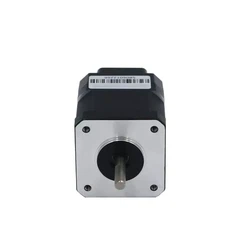
First off, let's understand what an Integrated BLDC Motor is. An Integrated BLDC Motor, like the ones you can check out here Integrated Brushless Motor, combines the motor and its drive electronics into a single unit. This integration offers a bunch of benefits such as reduced wiring, smaller footprint, and improved reliability.
Now, what's commutation? Well, commutation is the process of switching the current in the motor's windings at the right time to keep the motor rotating smoothly. In a BLDC motor, since there are no brushes to do this job (unlike traditional DC motors), we need an electronic way to handle commutation.
There are mainly two types of commutation methods for Integrated BLDC Motors: sensor - based commutation and sensorless commutation.
Sensor - based Commutation
Sensor - based commutation uses sensors to detect the position of the rotor. The most commonly used sensors in BLDC motors are Hall effect sensors. These sensors are placed around the stator of the motor and they can sense the magnetic field of the rotor. When the rotor moves, the magnetic field changes, and the Hall effect sensors send signals to the motor controller.
The motor controller then uses these signals to determine the exact position of the rotor. Based on this position information, the controller switches the current in the motor windings at the appropriate time. For example, if the rotor is at a certain position, the controller will send current to specific windings to create a magnetic field that will push the rotor to the next position.
One of the big advantages of sensor - based commutation is its accuracy. Since the sensors directly measure the rotor position, the commutation can be very precise. This results in smooth operation, especially at low speeds. It also allows for good torque control, which is important in applications where you need to maintain a constant torque, like in robotics or precision machinery.
However, sensor - based commutation also has some drawbacks. The sensors add to the cost and complexity of the motor. They also take up space inside the motor, which can be a problem if you're working on a project with limited space. And, like any electronic component, the sensors can fail over time, which may lead to motor malfunctions.
Sensorless Commutation
Sensorless commutation, as the name suggests, doesn't use any physical sensors to detect the rotor position. Instead, it relies on the back - electromotive force (back - EMF) generated by the motor. When the rotor rotates in the magnetic field of the stator, it induces a voltage in the motor windings. This induced voltage is called the back - EMF.
The motor controller monitors the back - EMF of the motor windings. By analyzing the characteristics of the back - EMF, such as its amplitude and phase, the controller can estimate the position of the rotor. Once the rotor position is estimated, the controller can then perform the commutation process.
The main advantage of sensorless commutation is its simplicity and cost - effectiveness. Since there are no sensors, the motor is cheaper to manufacture and more reliable in the long run. It also has a smaller size, which is great for applications where space is at a premium, like in small drones or portable devices.
But sensorless commutation also has its limitations. It can be less accurate than sensor - based commutation, especially at low speeds. At low speeds, the back - EMF is very small, which makes it difficult for the controller to accurately estimate the rotor position. This can result in rough operation and reduced torque control at low speeds.
Choosing the Right Commutation Method
When it comes to choosing between sensor - based and sensorless commutation for an Integrated BLDC Motor, it really depends on your specific application.
If you need high - precision control, smooth operation at low speeds, and excellent torque control, then sensor - based commutation might be the way to go. Applications like industrial automation, medical equipment, and high - end robotics often require this level of performance. You can find some great Brushless Dc Motor with Integrated Drive options for these types of applications.
On the other hand, if cost, size, and reliability are your main concerns, and you can tolerate some loss of performance at low speeds, then sensorless commutation is a better choice. This method is commonly used in consumer electronics, small appliances, and some automotive applications.
As a supplier of Integrated BLDC Motors, I've seen firsthand how different commutation methods can impact the performance of a motor in various applications. We offer a wide range of motors with both sensor - based and sensorless commutation options to meet the diverse needs of our customers.
If you're in the market for an Integrated BLDC Motor and are not sure which commutation method is right for your project, don't hesitate to reach out. We have a team of experts who can help you make the best decision based on your specific requirements. Whether you need a motor for a small DIY project or a large - scale industrial application, we've got you covered.


In conclusion, understanding the commutation method of an Integrated BLDC Motor is crucial for getting the most out of your motor. By choosing the right method, you can ensure optimal performance, reliability, and cost - effectiveness for your application. So, if you're interested in learning more or making a purchase, just get in touch, and we'll be happy to assist you.
References
- "Brushless DC Motors: Theory, Design, and Application" by Krishnan R.
- "Electric Motor Handbook" by Teruo Kenjo.


