

Hey there! As a supplier of Manual Multi - Axis Stages, I often get asked about how to measure the accuracy of these stages. It's no doubt a crucial question, as the accuracy of manual multi - axis stages can greatly affect the performance of various applications, from microscopy to precision manufacturing. So, in this blog, I'll share some insights on measuring the accuracy of these stages.
First off, let's talk about what we mean by the "accuracy" of manual multi - axis stages. Accuracy generally refers to how close the actual position of the stage is to the desired position. There are a few key aspects to consider when measuring this accuracy, including linear accuracy, angular accuracy, and repeatability.
Linear Accuracy
Linear accuracy is all about how precisely the stage can move along a straight line. To measure linear accuracy, one common method is to use a linear encoder. A linear encoder is a device that can precisely measure the linear displacement of an object. You can attach the linear encoder to the stage, and as the stage moves, the encoder will record the actual displacement.
Let's say you set the stage to move 10 millimeters along the X - axis. After the movement, you check the reading on the linear encoder. If the encoder shows 9.98 millimeters, then there's a small error in the movement. The difference between the desired displacement (10 mm) and the actual displacement (9.98 mm) is the linear error. You can repeat this process for different displacement values to get a comprehensive understanding of the stage's linear accuracy.
Another way to measure linear accuracy is by using a laser interferometer. A laser interferometer is a highly precise instrument that uses the interference of laser light to measure small displacements. It can provide extremely accurate measurements, even for very small movements. However, laser interferometers are usually more expensive and require more complex setup compared to linear encoders.
Angular Accuracy
For multi - axis stages that can rotate, angular accuracy is an important factor. Angular accuracy refers to how precisely the stage can rotate to a desired angle. To measure angular accuracy, you can use a rotary encoder. A rotary encoder is similar to a linear encoder, but it measures angular displacement instead of linear displacement.
You can set the stage to rotate, say, 30 degrees. Then, check the reading on the rotary encoder. If the encoder shows 29.9 degrees, there's an angular error. Similar to linear accuracy measurement, you can repeat this process for different angular settings to evaluate the overall angular accuracy of the stage.
Repeatability
Repeatability is another crucial aspect of accuracy. It refers to the ability of the stage to return to the same position or angle repeatedly. Even if a stage has good linear or angular accuracy, poor repeatability can still cause problems in applications.
To measure repeatability, you can perform multiple movements to the same target position or angle. For example, you can move the stage to a specific X - Y - Z position 10 times. After each movement, record the actual position using a measuring device like a linear encoder. Then, calculate the variation in these recorded positions. A smaller variation indicates better repeatability.
Factors Affecting Accuracy
There are several factors that can affect the accuracy of manual multi - axis stages. One of the main factors is the quality of the mechanical components. For example, if the lead screws or gears in the stage are of low quality, they can introduce errors in the movement. The smoothness of the guide rails also plays a role. Rough or misaligned guide rails can cause the stage to move unevenly, leading to accuracy issues.


Another factor is the user's operation. Manual multi - axis stages require the user to adjust the position or angle manually. If the user doesn't use the adjustment knobs correctly, it can result in inaccurate movements. For instance, if the user applies too much force or doesn't turn the knob steadily, the stage may overshoot or undershoot the desired position.
Our Manual Multi - Axis Stages
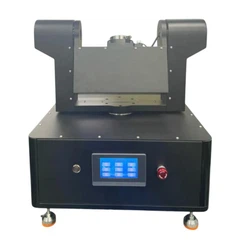
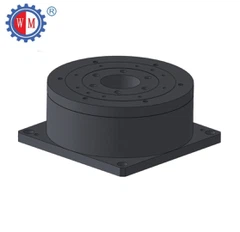
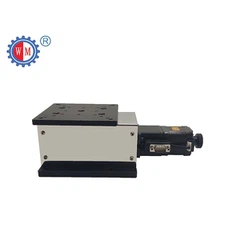
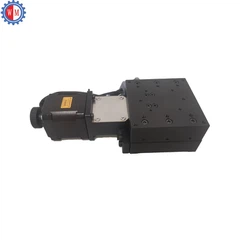
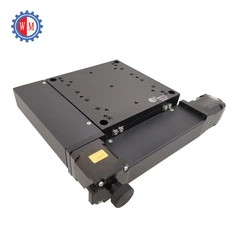
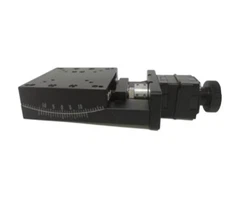
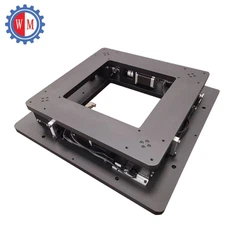
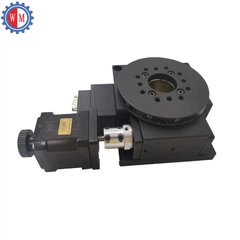
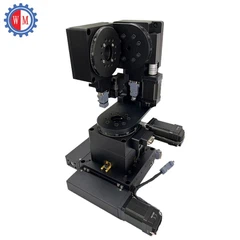
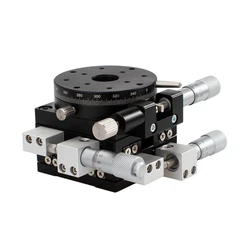
At our company, we offer a wide range of manual multi - axis stages, including the Manual Xyr Stage, Manual Linear XYZ Translation Stage, and Manual XZ Translation Stage.
We take great care in manufacturing these stages to ensure high accuracy. We use high - quality mechanical components and perform strict quality control during the production process. Our stages are designed to provide precise linear and angular movements, with good repeatability.
How We Ensure Accuracy
During the manufacturing process, we use advanced machining techniques to ensure the precision of the mechanical parts. For example, the lead screws are precisely machined to have a smooth and accurate thread, which helps in providing consistent linear movement. The guide rails are also carefully ground and polished to ensure smooth and straight movement of the stage.
After the parts are manufactured, we perform a series of tests to measure the accuracy of the stages. We use high - precision measuring instruments like linear encoders and laser interferometers to check the linear and angular accuracy. We also test the repeatability by performing multiple movements to the same position. Only the stages that meet our strict accuracy standards are released for sale.
Importance of Accuracy in Applications
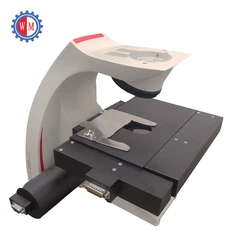
The accuracy of manual multi - axis stages is of great importance in various applications. In microscopy, for example, accurate positioning of the sample is crucial for obtaining clear and detailed images. If the stage has poor accuracy, the sample may not be in the correct position, resulting in blurry or incomplete images.
In precision manufacturing, accurate movement of the stage is necessary for processes like drilling, milling, and cutting. A small error in the stage's position can lead to defective products. For example, if a drill bit is not accurately positioned due to poor stage accuracy, it can drill holes in the wrong places on a workpiece.
Contact Us for Your Needs
If you're in the market for manual multi - axis stages and are concerned about accuracy, look no further. Our stages are designed to meet the highest accuracy requirements. Whether you need a Manual Xyr Stage for a specific application or a Manual Linear XYZ Translation Stage for more complex movements, we've got you covered.
If you have any questions about our products, or if you'd like to discuss your specific requirements, don't hesitate to reach out. We're always happy to help you find the right manual multi - axis stage for your needs. Let's start a conversation and see how we can work together to improve your projects with our high - accuracy stages.
References
- "Precision Engineering: Theory and Practice" by Bryan, J. B.
- "Mechanical Design Handbook" by Shigley, J. E., & Mischke, C. R.


