
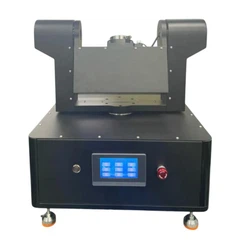
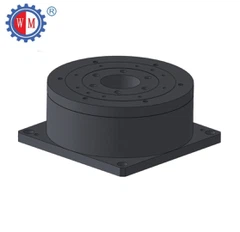
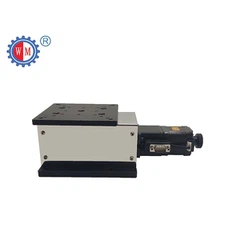
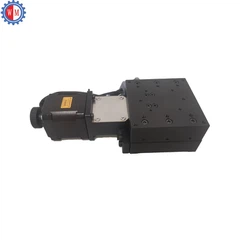
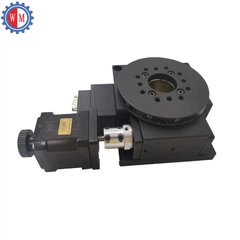
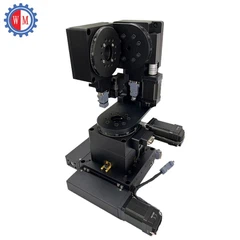
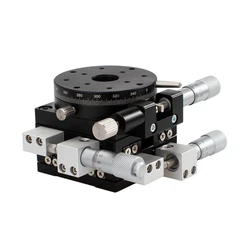
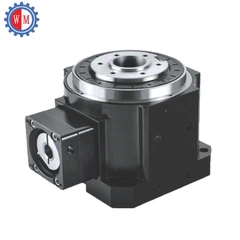


Hey there, fellow lab enthusiasts! I'm a supplier of Motorized Lab Jacks, and today I'm gonna dive into a hot topic: How does a motorized lab jack compare to a manual lab jack?
1. Basics of Lab Jacks
First off, let's quickly cover what lab jacks are. Lab jacks are essential tools in scientific laboratories. They're used to adjust the height of equipment like microscopes, sensors, or other delicate instruments. You can think of them as adjustable platforms that help you get the perfect height for your experiments.
There are two main types: manual and motorized. Manual lab jacks are the old - school option. You use a hand - crank or a screw mechanism to raise or lower the platform. It's like the classic way of doing things, and it's been around for ages. On the other hand, motorized lab jacks use an electric motor to move the platform up and down. It's a more modern approach that comes with a bunch of cool features.


2. Precision and Accuracy
One of the biggest differences between the two is precision. With a manual lab jack, your precision depends on how steady your hand is. When you turn that crank, it's easy to overshoot or undershoot your desired height. It's like trying to thread a needle with mittens on. You might get close, but it's not always spot - on.
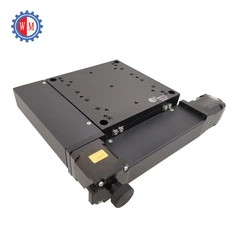
In contrast, motorized lab jacks offer much higher precision. They can be programmed to move in very small increments. For example, if you need to raise your equipment by just 0.1 mm, a motorized jack can do that with ease. This level of precision is crucial in experiments where even the slightest height difference can affect the results. Check out our Precision Motorized Vertical Lift Stage for a great example of a motorized jack with high precision.
3. Speed of Operation
Speed is another important factor. Manual lab jacks are relatively slow. You have to turn the crank bit by bit, and if you need to make a large adjustment, it can take a while. It's like walking up a long flight of stairs one step at a time.
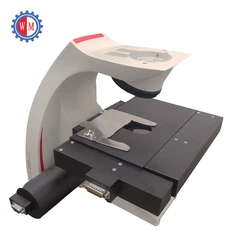
Motorized lab jacks, however, can move much faster. You can set the speed of the motor, and it can quickly reach the desired height. This is especially useful when you're in a time - sensitive experiment or when you need to make multiple height adjustments in a short period. Our High Precision Motorized Z Axis Stage is designed to offer both speed and precision.
4. Ease of Use
Let's talk about how easy they are to use. Manual lab jacks are simple in a way. There's not much to learn. You just turn the crank, and you're good to go. But for some people, especially those with limited hand strength or dexterity, it can be a bit of a challenge.
Motorized lab jacks are super user - friendly. You can control them with a remote or a control panel. There are usually buttons for up, down, and you can even set specific positions. It's like using a modern smartphone compared to an old - fashioned rotary phone. You don't have to put in a lot of physical effort, which makes it great for long - term use.
5. Reproducibility
Reproducibility is key in scientific research. You want to be able to repeat an experiment and get the same results every time. With a manual lab jack, it's hard to reproduce the exact same height adjustment. Every time you turn the crank, there's a little bit of variation.
Motorized lab jacks shine in this area. Once you've programmed a specific height, you can easily repeat that adjustment. This ensures that your experiments are consistent and reliable. It's like having a robot that always does the job the same way.
6. Cost
Cost is always a consideration. Manual lab jacks are generally cheaper. They have a simpler design and don't require an electric motor or control system. So, if you're on a tight budget, a manual jack might be the way to go.
But motorized lab jacks, while more expensive upfront, can save you money in the long run. Their precision and reproducibility can lead to more accurate experiments, which can save you from having to repeat experiments due to inaccurate height adjustments. Also, the time saved from faster operation can be valuable, especially in a busy lab environment.
7. Safety
Safety is crucial in any lab setting. Manual lab jacks are relatively safe, but there's a risk of injury if you accidentally turn the crank too hard or if your hand slips. And if you're working with heavy equipment on the jack, it can be difficult to control the movement, which could lead to the equipment falling.
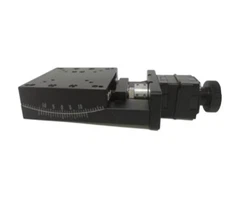
Motorized lab jacks have built - in safety features. They often have limit switches that prevent the platform from moving beyond a certain point. This reduces the risk of accidents and damage to your equipment. Our Short Travel Motorized Vertical Positioning Stage is designed with safety in mind, ensuring a smooth and secure operation.
8. Flexibility and Customization
Motorized lab jacks offer more flexibility and customization options. You can program them to move in different patterns, stop at multiple positions, and even integrate them with other lab equipment. This allows you to create more complex experimental setups.
Manual lab jacks are more limited in this regard. They basically do one thing: go up and down when you turn the crank. If you need more advanced functionality, a motorized jack is the better choice.
Conclusion
So, there you have it! Motorized lab jacks and manual lab jacks each have their pros and cons. Manual lab jacks are simple, cheap, and can be a good option for basic experiments or when you're on a tight budget. But if you need high precision, speed, ease of use, reproducibility, safety, and flexibility, then a motorized lab jack is the way to go.
If you're interested in learning more about our motorized lab jacks or if you're ready to make a purchase, don't hesitate to reach out. We're here to help you find the perfect lab jack for your needs. Whether you're a small research lab or a large industrial facility, we've got the right solution for you.
References
- General knowledge of lab equipment and their applications
- Experience in the lab equipment supply industry


